How to Make Rich and Spicy Sundubu-jjigae – My Husband’s Favorite Recipe
Introducing a rich and spicy Sundubu-jjigae recipe that I made at my husband’s request. With fragrant scallion oil, spicy chili oil, beef, and plenty of vegetables, this hearty Korean soft tofu stew pairs perfectly with a bowl of rice.
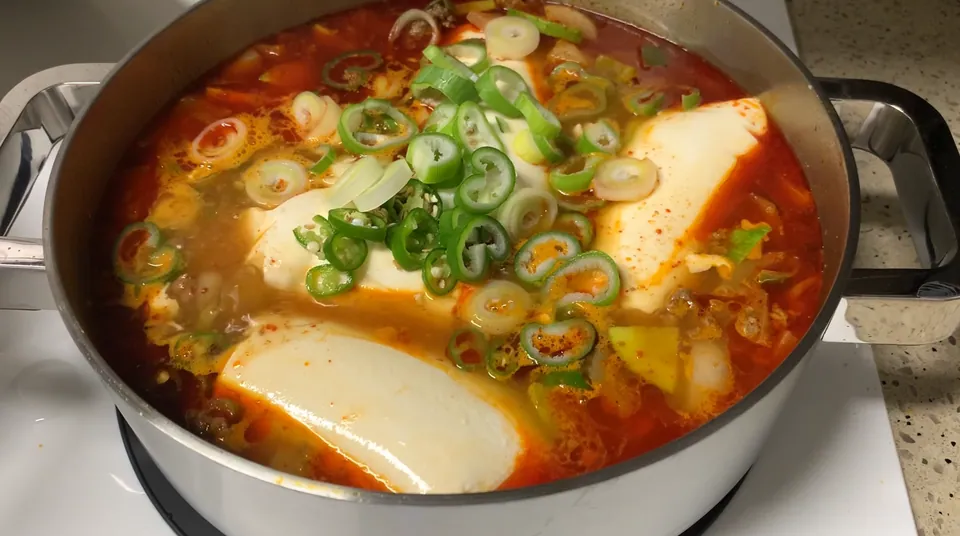
Hello everyone~
Today, I am excited to share the recipe for a dish that my husband constantly begs me to make, especially when he returns home late after a long, exhausting shift at work: spicy and rich Sundubu-jjigae (Korean Soft Tofu Stew).
At first glance, Sundubu-jjigae can look somewhat intimidating. Its fiery red broth and intense flavor make it seem like a dish that is difficult to recreate at home without a complex seafood or kelp broth. However, if you understand a few key culinary principles and follow the steps in the correct order, you can easily achieve a deep, restaurant-quality flavor without fail, and without spending hours boiling stock 😊 This stew is a true one-pot wonder; once it’s bubbling on the table, you won’t need any other side dishes besides a bowl of warm rice. Let’s look at the science and steps behind this ultimate Korean comfort food!
📋 Recipe Overview
- Prep & Cook Time: Approx. 25 mins
- Difficulty: Medium
- Servings: 2-3 servings
- Cooking Method: Boiling / Stew Simmering
🛒 Ingredients – A Hearty Meal for the Family
Sundubu-jjigae is incredibly versatile. Depending on what you have in your refrigerator, you can easily adapt it into a seafood, beef, or pork version. Today, I am sharing the most classic, comforting version using ground beef and fresh vegetables.
- 2 packs of soft tofu (Sundubu)
- 150g ground beef (or ground pork)
- 1/2 onion, 1/3 zucchini
- 1 stalk of green onion (scallion), 2 Cheongyang chili peppers (for heat)
- 4 fresh eggs
- 3 tbsp neutral cooking oil, 3 tbsp Korean red pepper powder (Gochugaru)
- 2 tbsp soup soy sauce (Guk-ganjang), 2 tbsp anchovy fish sauce, 1 tbsp minced garlic
While ground beef gives the stew a rich, savory, and premium taste, ground pork is also an excellent option because the pork fat melts into the broth, giving it a sweet, classic Korean home-cooked flavor.
If you prefer seafood, you can swap the meat for a handful of fresh manila clams, oysters, or a bag of frozen mixed seafood. The clams will release natural glutamates and succinic acid, resulting in a clean, briny, and refreshing broth. For a vegetarian or vegan alternative, substitute the meat with finely diced fresh shiitake or button mushrooms. Shiitake mushrooms are loaded with guanylate, a natural compound that provides an intense umami flavor that mimics the depth of meat.
🔥 Making the Oil – The Science of Scallion and Chili Extraction
The success of your Sundubu-jjigae is determined in the very first few minutes of cooking. The secret to that vibrant red color and smoky, spicy aroma is creating a balanced scallion and chili oil.
Start by adding 3 tablespoons of neutral oil and the finely chopped white parts of the green onion to a cold pan. Heat it slowly over low heat to infuse the oil with the scallions. Once the oil begins to bubble and release a sweet, herbaceous aroma, add 3 tablespoons of Korean red pepper powder (Gochugaru) and stir-fry gently to extract the spicy chili oil.
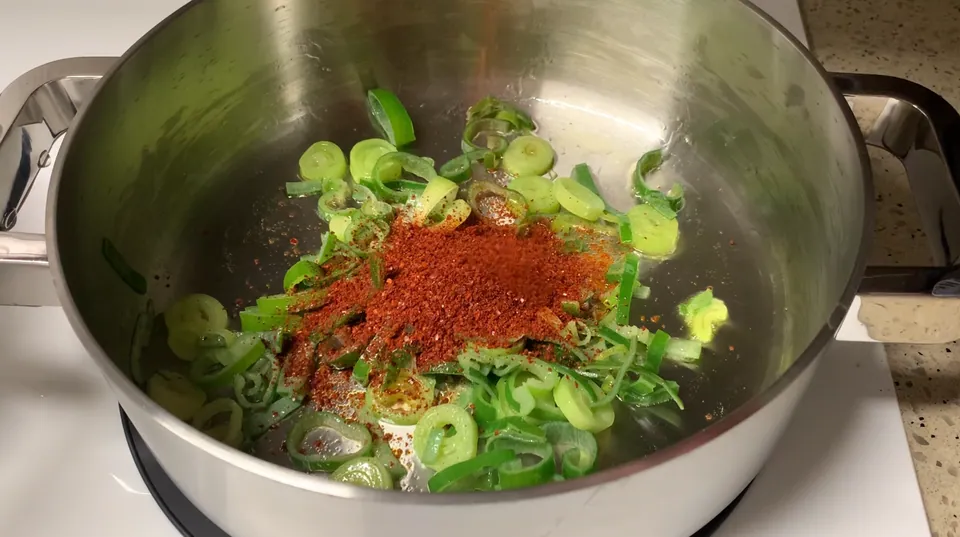
There is a fascinating scientific principle behind this step. The spicy compound in red pepper powder, capsaicin, as well as the red pigments, carotenoids, are highly fat-soluble (lipophilic). This means they do not dissolve in water; they can only be extracted and suspended in fat. Stir-frying the Gochugaru in oil before adding any liquid is the only way to release these flavors and colors into the fat molecules, which will later coat the entire stew.
However, because Gochugaru consists of dried, ground pepper flakes, it contains very little moisture and is extremely sensitive to heat. If the pan is too hot, the pepper powder will burn within seconds. Burnt Gochugaru turns black, releases a bitter, charcoal-like taste, and leaves unsightly dark specks floating in your stew, ruining both the taste and appearance. To prevent this, always lower the heat to minimum, or turn off the stove completely, before adding the Gochugaru. Stir-fry it in the residual heat of the oil until it forms a smooth, red paste. During my early cooking days, I made the mistake of frying it on high heat, burning the powder and filling the kitchen with coughing-inducing smoke! Keep it low and slow to ensure a clean, bright chili oil.
🥩 Stir-frying the Meat and Vegetables – Developing Umami Synergy
Once your chili oil is ready, add the ground beef to the pan and turn the heat up to medium. As the meat stir-fries, its proteins brown, and the fat renders out, blending with the chili oil to form an even richer, deeper red base.
When the meat is about 80% cooked, push it to the side of the pan to create an empty space. Pour 2 tablespoons of soy sauce and 2 tablespoons of anchovy fish sauce directly onto the hot surface of the pan, allowing them to bubble and scorch slightly before mixing them with the meat.
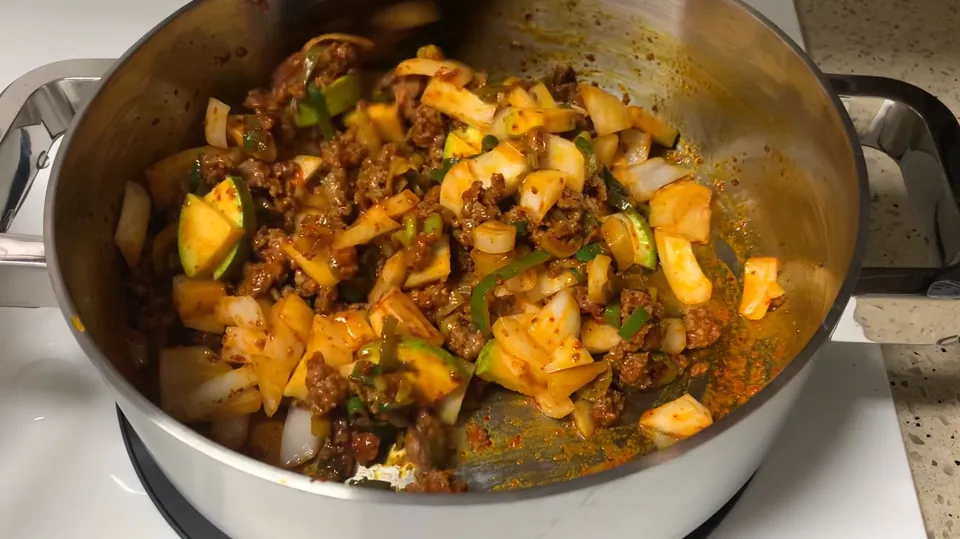
Allowing the soy sauce and fish sauce to caramelize slightly on the pan surface drives off excess moisture and triggers a rapid Maillard reaction, concentrating their flavors. More importantly, this combination utilizes umami synergy. Soy sauce contains plant-derived glutamic acid, while anchovy fish sauce contains animal-derived inosinic acid. When these two types of umami compounds are combined, they bind to different receptors on our tongue simultaneously, magnifying the perceived savoriness by several times. This is why the stew tastes incredibly deep and complex even without boiling kelp and anchovies for hours.
Once the sauce is incorporated, toss in the chopped onions and zucchini. Stir-fry until the vegetables are coated in the red oil and begin to soften.
💧 Simmering – The Unique Science of Soft Tofu and Water Content
When the vegetables are slightly soft, pour in just enough water to barely cover the ingredients. This should be about 250ml to 300ml (roughly 1.5 cups).
It might look like very little liquid, but this is the most critical step of the recipe. Soft tofu (Sundubu) is an unpressed curd with an incredibly high water content—about 90%. As the soft tofu heats up in the boiling stew, its coagulated soy proteins (globulin) contract. This contraction forces the water molecules trapped inside the tofu’s protein matrix to squeeze out into the surrounding broth.
If you start with a generous amount of water, the addition of the tofu will flood the pot with extra liquid, diluting your seasonings and leaving you with a thin, bland soup. By keeping the initial water level low, you allow the liquid released by the tofu to balance the stew to the perfect, thick consistency.
Once the pot comes to a rolling boil, cut the tofu packaging in half and slide the soft tofu into the pot in large, rustic chunks. Do not mash or stir the tofu too much; leaving it in large pieces keeps the stew looking clean and provides a lovely, silky texture when eaten.
Next, add the chopped Cheongyang chilies and the green parts of the scallions. Let it simmer for another 5 minutes to let the spicy, fresh flavors penetrate the tofu.
🥚 Final Touch – Poaching the Eggs Gently
To finish the dish, we add the eggs. Since my family absolutely loves eggs, we added 4 eggs to the boiling stew.
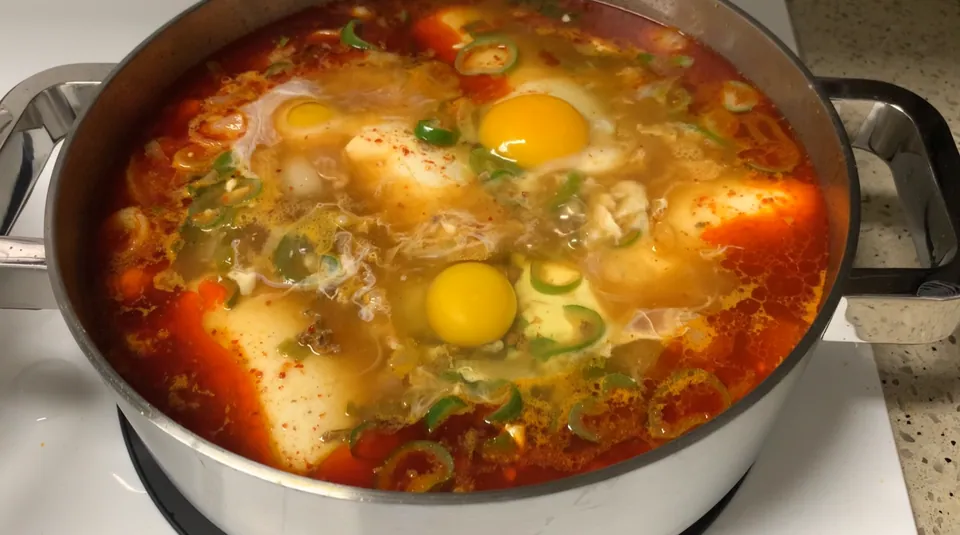
When adding eggs to Sundubu-jjigae, there is one major mistake to avoid: stirring the eggs into the soup. If you stir the raw eggs, the yolks and whites will break apart and disperse through the liquid. The proteins in the egg will bind with the free starches and fats in the broth, turning the soup cloudy, thick, and chalky. It completely masks the sharp, clean, and spicy kick of the chili oil.
Instead, lower the heat to a gentle simmer and carefully crack the eggs into different corners of the pot. Do not touch or stir them. Let them poach slowly in the hot soup for about 10 minutes. The egg whites will cook to a soft, pillowy texture, while the yolks remain warm, rich, and runny—similar to a poached egg. This preserves the beautiful, fiery red look of the broth while keeping the soup sharp and clean.
🍽️ Time to Enjoy a Cozy Meal
Once done, transfer the stew to a hot stone bowl (ttukbaegi) to keep it bubbling, or serve it straight from the pot. To enjoy, scoop a generous portion of the steaming, spicy broth, silky soft tofu, and a runny egg yolk over a bowl of freshly steamed white rice. Mix it together gently; the rich egg yolk will emulsify with the spicy chili oil, creating an incredibly creamy, comforting bite.
On the night I made this, my husband was exhausted, but as soon as he took his first spoonful of the hot, spicy stew, his face lit up. “This is exactly what I needed,” he said, “it feels like all the stress of the day is melting away.” Seeing him happily devour the soft tofu and eggs made all the effort of cooking late at night worthwhile. Even though I almost burned the chili powder at the start, those little moments make home cooking so special.
🧪 The Science & Pro Tips for Perfect Soon-Dubu Stew
Understanding soft tofu’s water release behavior and oil infusion kinetics ensures a robust, flavorful stew.
- Managing Soft Tofu Syneresis (Water Release): Soft tofu is a gel structure containing over 90% water. When heated in the stew, the soy proteins coagulate further, squeezing out the trapped water—a process called syneresis.
- Pro-Tip: Slice the soft tofu in half and let it drain in a colander for 30 minutes before cooking. This removes excess moisture, preventing your flavorful broth from getting watered down.
- Controlling Chili Oil Burning Point: Chili powder burns extremely easily at temperatures above 120°C (248°F). Sauté the scallions and chili powder on low heat or temporarily turn off the stove, allowing the residual heat of the pan to draw out the fat-soluble capsaicin and red carotenoid pigments into the cooking oil safely.
- Umami Synergy of Soy Sauce and Fish Sauce: Combining plant-based soy amino acids (glutamate) with animal-based fish sauce (inosinate) stimulates multiple taste receptors simultaneously. This chemical synergy gives the soup base its deep, rich, overnight-cooked taste in just a few minutes.
👩🍳 SSUCOOK’s Recipe Trustworthiness & Food Safety Guide
- Family-Tested Recipe: This recipe has been hand-crafted, cooked, and family-approved by SSUCOOK. I test and refine every step in my own kitchen to ensure a reliable culinary experience.
- Safe Food Storage: Do not leave cooked food at room temperature for more than 2 hours. Transfer it to an airtight container and refrigerate below 4°C (39°F). Consume within 3 days. For longer storage, freeze portions for up to 1 month. When preparing meals for infants or vulnerable individuals, maintain strict kitchen hygiene by separating knives and cutting boards for raw meat and vegetables.
If you are looking for a comforting, warming meal to cook this weekend, or craving something spicy and satisfying, I highly recommend trying this foolproof Sundubu-jjigae recipe. By managing your heat during the oil extraction and keeping the water level low, you can create a masterpiece that rivals any Korean restaurant. Have a warm, happy, and delicious day! 🍲✨