Samgyetang & Rösti – A Warm Family Table
Samgyetang is a well-known Korean traditional dish, often enjoyed as a nourishing meal. This time, I paired it with Rösti, a Swiss dish that brings back memories from our honeymoon. A warm meal shared with family, and a few beginner cook challenges included!

Hello everyone~
Today, I am excited to share a very special meal that I prepared for my family: a comforting pot of traditional Korean ginseng chicken soup, known as Samgyetang, paired with a crispy, buttery Swiss potato dish called Rösti.
A few days ago, my husband came home looking completely drained and exhausted, complaining that he felt low on energy. In Korea, when someone is feeling under the weather or physically fatigued, the ultimate cure-all is a piping-hot bowl of Samgyetang. Since I was going to make it anyway, I decided to scale up the recipe, buy two whole chickens, and invite my parents-in-law over for a cozy family dinner. Hosting my in-laws always makes me a little nervous as a beginner home cook, so I paid extra close attention to every detail, from the chicken prep to the cooking temperature. Fortunately, the meal was a huge success, and seeing everyone eat happily warmed my heart.
Samgyetang is a traditional Korean soup featuring a whole young chicken stuffed with garlic, ginseng, jujubes (Korean dates), and sweet rice, all simmered slowly to create a deeply restorative broth. Historically, it is eaten during the “Sambok” period—the three hottest days of summer according to the lunar calendar—to replenish nutrients lost through sweating. To accompany this classic dish, I wanted to prepare a side that carried personal meaning. I decided on Swiss Rösti, which brought back fond memories of sitting at a sunny cafe under the Swiss Alps during our honeymoon. Combining a warm Eastern herbal soup with a comforting Western potato pancake created a unique, comforting, and delicious table that everyone thoroughly enjoyed.
📋 Recipe Overview
- Prep & Cook Time: Approx. 1 hour 15 mins
- Difficulty: Easy
- Servings: 2 servings
- Cooking Method: Boiling / Simmering
🐓 Starting with Chicken Prep: The Science of Cleaning and Blanching
For any home cook, prepping whole raw chickens can be a bit intimidating. The texture, the weight, and the overall process require a bit of courage! As a beginner, I had to wear double layers of gloves and take a deep breath before diving in.
First, heat a large pot of water and blanch two whole chickens for about 5 minutes.
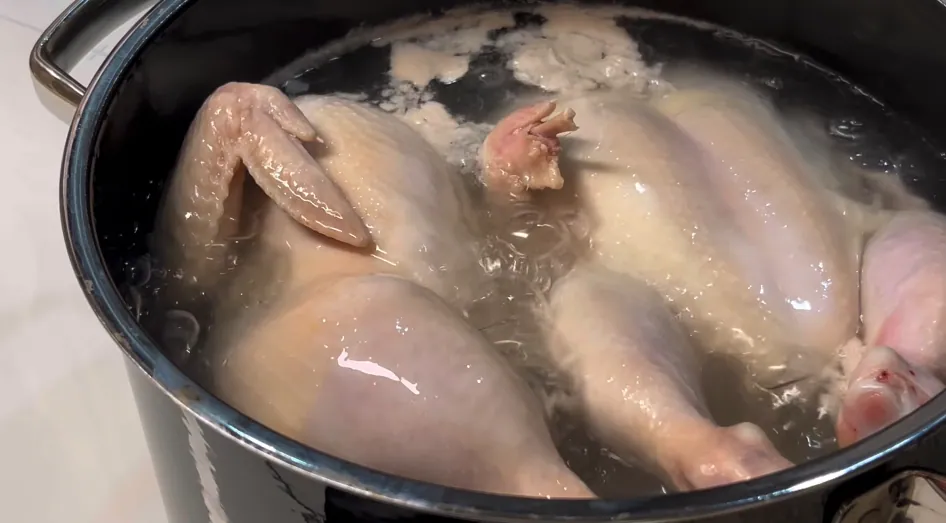
When I first started cooking, I thought making chicken soup simply meant placing the raw bird directly into a pot of cold water and boiling it until done. However, I learned that this initial 5-minute blanching step is absolutely essential for achieving a clear, clean-tasting broth.
From a scientific standpoint, raw chicken contains residual blood, loose surface proteins, and cellular debris in the cavity and bone joints. If you simmer the chicken directly without blanching, these proteins dissolve into the water and coagulate as the temperature rises, forming a thick, gray foam (scum) on the surface of your soup. This not only makes the broth look muddy but also traps volatile sulfur compounds that cause a strong, gamey, and unpleasant odor. By blanching the chickens for 5 minutes, we quickly denature and solidify these surface proteins. This seals the outer layers of the meat to lock in the flavorful juices while allowing us to dump out the dirty water, ensuring the final soup is clean, clear, and fragrant.
After blanching, rinse the chickens under cold water and begin the trimming process. To eliminate gamey odors, you must locate and cut off two specific parts: the fatty tail (parson’s nose) and the tips of the wings. These areas contain concentrated sebaceous glands (oil-secreting glands). When boiled for a long time, these glands release heavy, greasy oils that impart a rancid and overly gamey flavor to the broth. Trimming them off with kitchen shears is a non-negotiable step. Additionally, make sure to reach inside the cavity and scrape out any dark red blood clots clinging to the ribcage, as these can make the soup taste bitter and metallic.
Do you remove the chicken neck when you cook Samgyetang?
I didn’t show this in the recipe video, but I decided to cut the neck off one of the chickens. Honestly, the sensation of cutting through the neck bone with shears felt a bit strange and made me shiver… It is one of those small kitchen challenges that I am still getting used to as a novice cook, but it is all part of the journey!
🧄 Adding Ingredients and Simmering: Cultivating the Perfect Broth
Once the chickens are thoroughly cleaned, it is time to build the flavors. I stuffed the cavity of each chicken with whole garlic cloves. As the garlic simmers, its pungent sulfur compounds break down and transform into sweet, aromatic molecules that mellow out the broth and complement the chicken juices beautifully.
Next, add a pre-made Samgyetang herbal packet, which you can find at any Korean grocery store. These packets typically contain a mixture of astragalus root (hwanggi), mulberry bark, Siberian ginseng, jujubes, and licorice root. These herbs do not just add a beautiful, golden-amber hue and a comforting, woody aroma; they are also highly valued in traditional medicine for boosting immunity, improving blood circulation, and reducing physical stress.
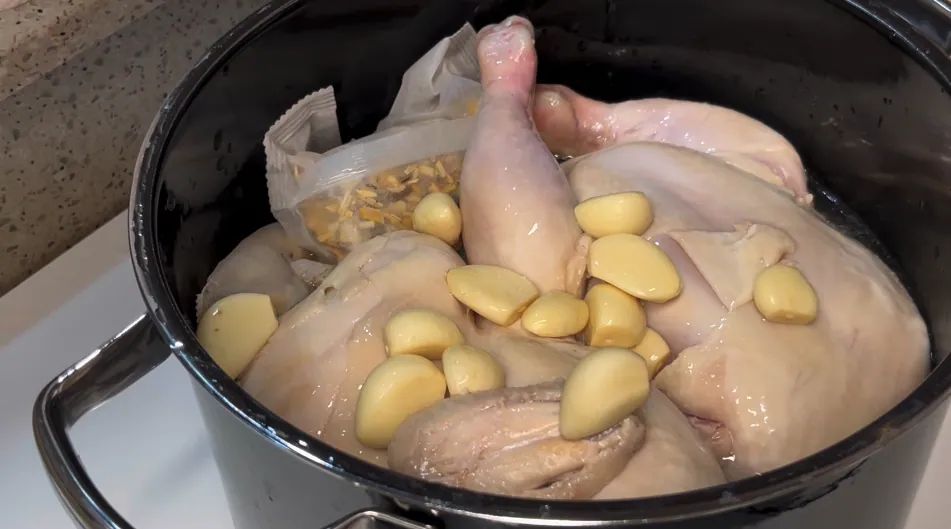
Pour in enough cold water to fully submerge the chickens. A good rule of thumb is a water-to-chicken ratio of about 2.5 to 3 times the weight of the birds. If you use too little water, the soup will dry out before the meat becomes tender; too much water, and the flavors will be diluted.
Bring the pot to a boil over high heat, then reduce the heat to medium-low. Cover the pot, but leave the lid slightly cracked. Leaving the lid slightly open allows any faint, gamey steam to escape into the air rather than condensing back down into the soup. Let it simmer gently for 1 to 1.5 hours. Periodically skim off any fat or foam that floats to the surface using a ladle. This step guarantees that your soup remains light, delicate, and easy on the stomach.
Ingredient Substitutions: If you cannot find a Korean herbal packet, do not worry! You can still make a wonderful, aromatic chicken soup by simmering the chicken with 15 cloves of garlic, 3 thick slices of fresh ginger, 2 whole leeks (or green onion roots), and a halved onion. This creates a clean, classic chicken broth (dak-gomtang) that is just as comforting. Furthermore, if cooking a whole chicken feels too overwhelming, you can substitute it with bone-in chicken thighs or drumsticks. This reduces the cooking time significantly while still providing plenty of collagen and flavor from the bones.
🍚 Our Family’s Samgyetang Style: The Art of the Porridge
Every family has their own unique way of serving Samgyetang. Some prefer the traditional method where glutinous rice is stuffed inside the chicken’s cavity and cooked together, while others prefer a lighter broth with no rice at all.
In our home, we do not stuff rice inside the chicken.
When you stuff the cavity with rice, the rice grains absorb a large portion of the chicken’s natural juices, which can leave the breast meat dry. Additionally, the starch from the rice dissolves into the water, turning the broth cloudy and thick. Instead, we cook the chicken in a clear, pure broth first. Once we finish eating the tender meat, we take the remaining, highly concentrated broth, add pre-soaked glutinous rice along with finely diced carrots, zucchini, and shiitake mushrooms, and simmer it slowly over low heat to make a luxurious chicken porridge (dak-juk). This allows us to enjoy the best of both worlds: a clear, comforting soup first, followed by a rich, comforting porridge.
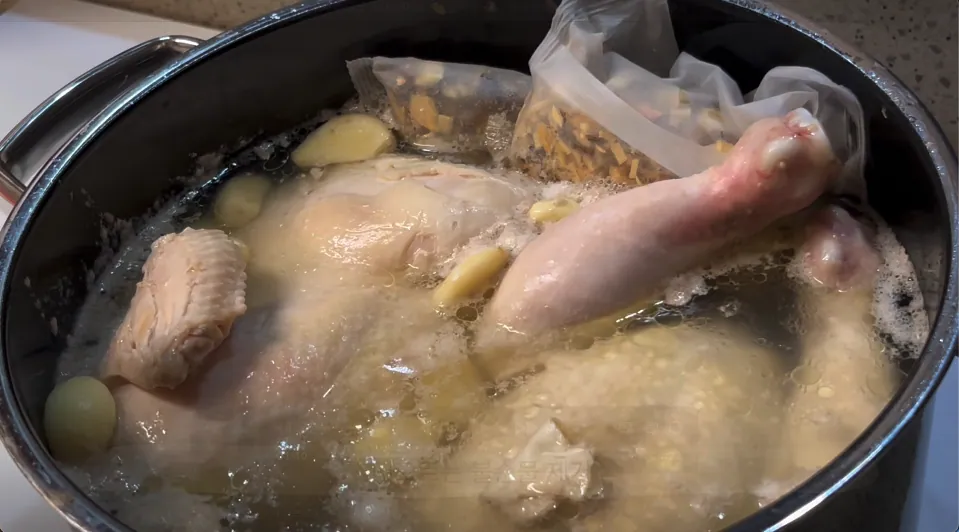
As the soup simmers and the meat becomes so tender that it literally falls off the bone, a wonderful, warm aroma fills the entire house. On a chilly day, there is nothing more soothing than the scent of garlic and warm herbs wafting from the kitchen. It is a reminder that food cooked with time and care is the ultimate comfort.
🥔 Making Rösti as a Side Dish: Recreating Swiss Memories
While the chicken was simmering away, I turned my attention to the side dish: Rösti, a classic Swiss potato pancake.
Rösti originated as a simple breakfast dish eaten by farmers in the canton of Bern, but it has since become a beloved national dish. It consists of grated potatoes fried in butter until golden and crispy. It is remarkably similar to Korean potato pancakes (gamja-jeon). During our honeymoon, my husband and I ordered a plate of hot, crispy Rösti at a mountain lodge in Jungfrau, and it was love at first bite. I wanted to share that happy memory with my parents-in-law by cooking it for them.

The secret to a perfect Rösti is slicing or grating the potatoes as thinly as possible. If the potato shreds are too thick, they will take too long to cook, leaving the center raw and preventing the shreds from binding together, which causes the pancake to fall apart when flipped.
Here is an important scientific tip: When making Korean-style potato pancakes, we often rinse the shredded potatoes in water to remove excess starch. For Swiss Rösti, however, you must never rinse the potatoes. Rösti does not use any flour, cornstarch, or eggs as a binder; it relies entirely on the potato’s natural starches to hold the shreds together. If you rinse the starch away, the potato strands will separate, and your Rösti will break into pieces in the pan.
Instead, toss the shredded potatoes with a pinch of salt and let them sit for 5 minutes. The salt will draw out excess moisture through osmosis. Squeeze the potato shreds thoroughly in a clean kitchen towel to remove this water. Removing the water is what allows the exterior of the potato to fry to a perfect, chip-like crispiness rather than steaming and turning soggy.
🧈 Crisping It Up: Butter and Oil Harmony
- 5g Salt
- 15g Melted butter
- Neutral cooking oil for frying
(Inspired by the recipe from the cooking channel ‘Hada at Home’)
Mix the squeezed potato shreds with the salt and 15g of melted butter. The melted butter coats the potato strands, providing a rich, nutty flavor and aiding in the caramelization process, which gives the Rösti its signature deep golden color.
Heat a generous amount of oil in a frying pan over medium heat. Add the potato mixture and use a spatula to press it down firmly, shaping it into a thin, even disc.
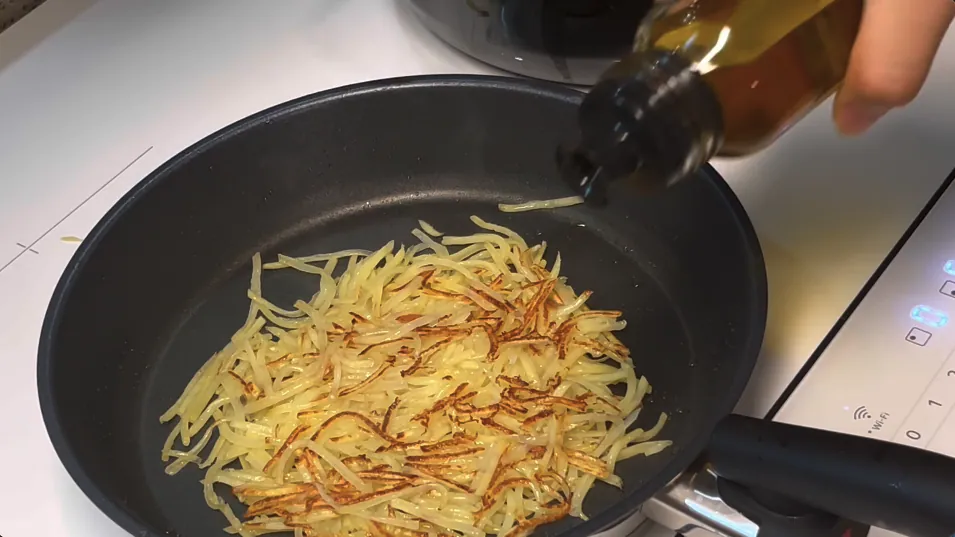
Cook until the edges turn a deep golden brown and the bottom feels solid. When you shake the pan, the pancake should slide easily. To flip it without breaking, slide the Rösti onto a large plate, place the pan upside down over the plate, and flip both over quickly.
Once flipped, drizzle a little more oil around the edges of the pan. Skimping on oil will result in a dry, soggy potato pancake. The generous oil and butter are what fry the exterior to a satisfying crunch, while keeping the interior soft, warm, and tender. Surprisingly, the salty, buttery crunch of the Rösti pairs beautifully with the clean, herbal, and comforting flavor of the Samgyetang!
💛 Wrapping Up a Special Dinner
With the steaming pot of Samgyetang and the golden, crispy Rösti set on the table, our family dinner finally began. My parents-in-law were delighted by the beautiful aroma filling the room and smiled warmly as they sat down.
I served the tender chicken legs to my in-laws, poured the hot broth, and we shared stories from our honeymoon in Switzerland. Hearing my father-in-law say, “I had no idea you could cook such a wonderful, deep broth. This is the best health meal I’ve had all year,” made all my kitchen struggles and the scary chicken-neck incident completely fade away.
🧪 The Science & Pro Tips for Rich Samgyetang
A deep, milky broth and fall-off-the-bone chicken rest on extraction kinetics and emulsion physics.
- Milky Broth through Collagen Gelatinization & Emulsification: Chicken bones, joints, and skin are packed with collagen. Simmering them for over an hour converts the tough collagen into soluble gelatin. The rolling boil disperses tiny fat droplets into the water, and the gelatin acts as an emulsifier, binding the oil and water together. This creates that creamy, milky appearance and sticky mouthfeel.
- Preventing Dry Breast Meat: Choose young chickens (around 450-500g). Once the water boils, reduce the heat to a gentle simmer (90°C - 95°C / 194°F - 203°F). High boiling temperatures shrink the protein fibers in the chicken breast, squeezing out all moisture and making it dry.
- The Cleansing Role of Garlic & Jujubes: Garlic contains allicin, and ginseng contains saponins, both of which mask and neutralize gamey sulfur compounds from chicken fat. Jujubes act as chemical sponges, absorbing floating impurities in the broth during cooking.
👩🍳 SSUCOOK’s Recipe Trustworthiness & Food Safety Guide
- Family-Tested Recipe: This recipe has been hand-crafted, cooked, and family-approved by SSUCOOK. I test and refine every step in my own kitchen to ensure a reliable culinary experience.
- Safe Food Storage: Do not leave cooked food at room temperature for more than 2 hours. Transfer it to an airtight container and refrigerate below 4°C (39°F). Consume within 3 days. For longer storage, freeze portions for up to 1 month. When preparing meals for infants or vulnerable individuals, maintain strict kitchen hygiene by separating knives and cutting boards for raw meat and vegetables.
Although I am still a beginner cook who sometimes panics in the kitchen, I realized how rewarding it is to prepare a meal filled with love and health for the people I cherish. The next time you want to show your loved ones how much you care, try making a warm pot of Samgyetang and a crispy plate of Rösti. Thank you for reading, and I hope you all have a warm, healthy, and beautiful day! ☀️