Making Korean Pickled Cucumbers (Oi-ji) – My First Homemade Jangajji
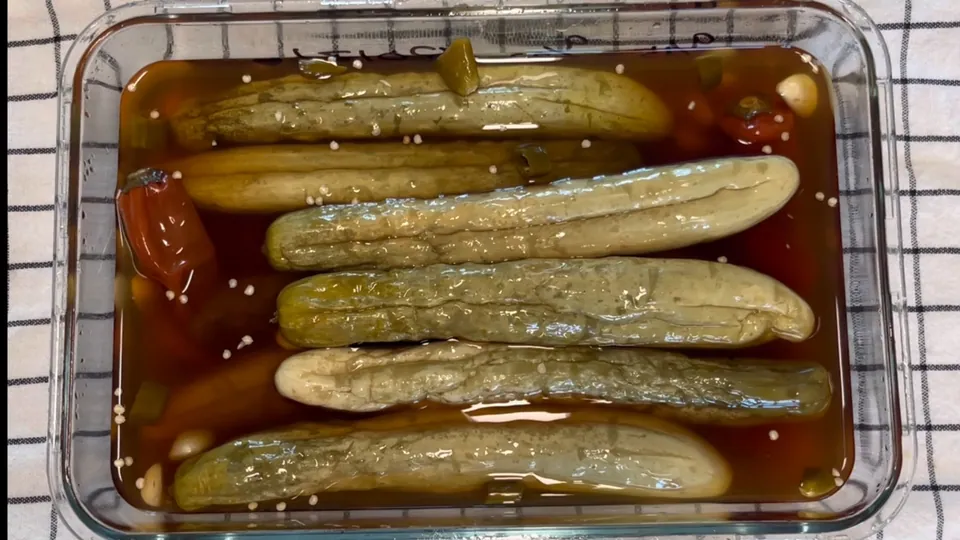
This is my first time making Korean pickled cucumbers (Oi-ji) using fresh cucumbers from Costco! I followed a simple recipe with sugar, salt, vinegar, and soju, and added garlic and chili peppers for extra flavor. After 7 days of fermentation, the result is a tangy side dish that pairs perfectly with rich meals. Here’s my beginner’s journey into Korean jangajji!
Hello there~
Today, I’m sharing my story of making Korean pickled cucumbers (Oi-ji) using fresh Costco cucumbers.
Believe it or not, despite eating various pickled side dishes throughout my life, I had never tasted traditional Oi-ji, let alone made it from scratch before this project. It was a completely new culinary adventure for me!
Oi-ji is a beloved, traditional Korean summer side dish. Unlike Western pickles, it focuses heavily on achieving a unique, highly concentrated crunchy texture that feels almost rubbery and squeaky in a delightful way. The traditional method of making Oi-ji requires boiling a massive pot of brine and pouring it over the cucumbers, a process that must be repeated multiple times. It is time-consuming and carries a risk of kitchen burns.
Instead, I chose a modern, hassle-free, “no-boil” recipe that utilizes the chemical synergy of sugar, salt, vinegar, and soju. In this post, I will explain the science behind how this no-boil method keeps cucumbers crisp and mold-free, how to prevent common pickling failures, and how to use your finished Oi-ji in various Korean recipes!
📋 Recipe Overview
- Prep & Cook Time: Approx. 15 mins (excluding curing)
- Difficulty: Easy
- Servings: 1-2 Jars
- Cooking Method: Pickling / Boiling
🥒 Starting with Fresh Costco Cucumbers
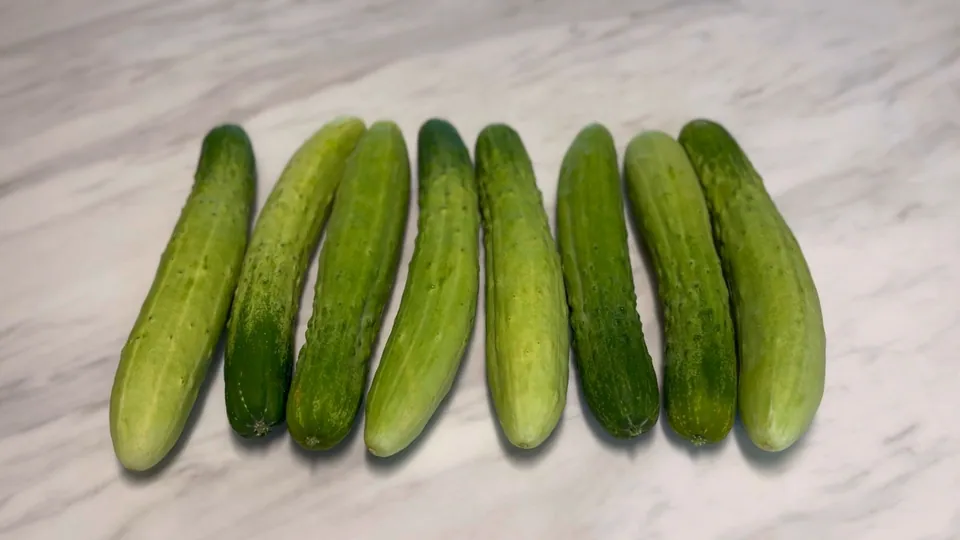
I purchased a pack of eight fresh cucumbers from Costco. These were clean, firm pickling cucumbers (known as Dadaegi-oi in Korea), which have a thin skin and dense flesh, making them ideal for long-term pickling.
🧪 Prepping Cucumbers: Protecting the Skin and Cell Walls
When preparing cucumbers for pickling, you must handle them with care. Many old recipes recommend scrubbing cucumbers vigorously with coarse sea salt. Avoid doing this.
Scrubbing too hard damages the delicate skin, rubs off the tiny protective bumps (spikes), and tears the cuticle layer. When the skin is damaged, it allows softening enzymes (pectinases) naturally present on the cucumber surface or in the air to penetrate the flesh. These enzymes break down pectin, the structural carbohydrate that holds the cell walls together, resulting in soft, soggy, and mushy pickles.
Instead, wash the cucumbers gently in cold water using a soft sponge or your hands. Afterward, dry them completely with a clean kitchen towel. Any residual tap water introduces moisture and wild bacteria, which can spoil the brine and cause mold. Lastly, trim off the stems. The stems contain high concentrations of cucurbitacin, a bitter compound that can leach into the pickling liquid and ruin the flavor.
🧪 Pectin and Calcium: The Secret to Squeaky Crunch
The cell walls of cucumbers are held together by pectin. During pickling, salt draws water out of the cells via osmosis, making the cell walls collapse and become denser.
To prevent them from disintegrating, the calcium ions naturally present in unrefined sea salt act as cross-linking agents. They bind to the pectin chains, forming a strong “egg-box” molecular structure. This calcium-pectin bond reinforces the vegetable’s structural integrity, giving Oi-ji its famous, squeaky, ultra-crunchy bite.
🧄 Adding Garlic and Chili for Extra Flavor
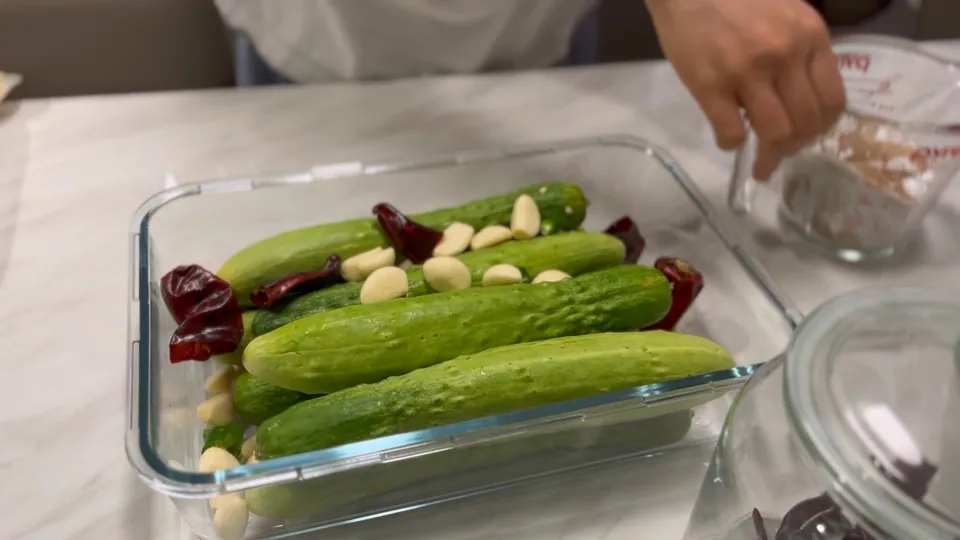
Since Oi-ji is a type of jangajji (Korean pickled vegetables), I decided to add a few aromatic elements to build flavor layers. I grabbed a handful of peeled whole garlic cloves, fresh green chilies, and two or three dried red chilies from my pantry. I sliced the dried chilies into small pieces so their heat could disperse easily.
This addition is not just for taste; it serves a biological purpose:
- Allicin in Garlic: Minced or whole garlic contains allicin, a organosulfur compound with strong antibacterial and antifungal properties.
- Capsaicin in Chili: Chili peppers contain capsaicin, which also acts as a natural antimicrobial.
Together, these compounds help suppress the growth of undesirable wild yeasts and bacteria in the early stages of fermentation, acting as natural preservatives.
🧂 Mixing the Seasoning – Vinegar and Soju Finish It Off
Instead of boiling water, I used a modern pickling ratio. I followed the recipe popularized by the culinary creator CheonjaeSonyeon (천재소년), which uses a simple volumetric ratio of sugar, salt, vinegar, and soju:
- 200mL sugar
- 100mL salt
- 200mL vinegar
- 100mL soju
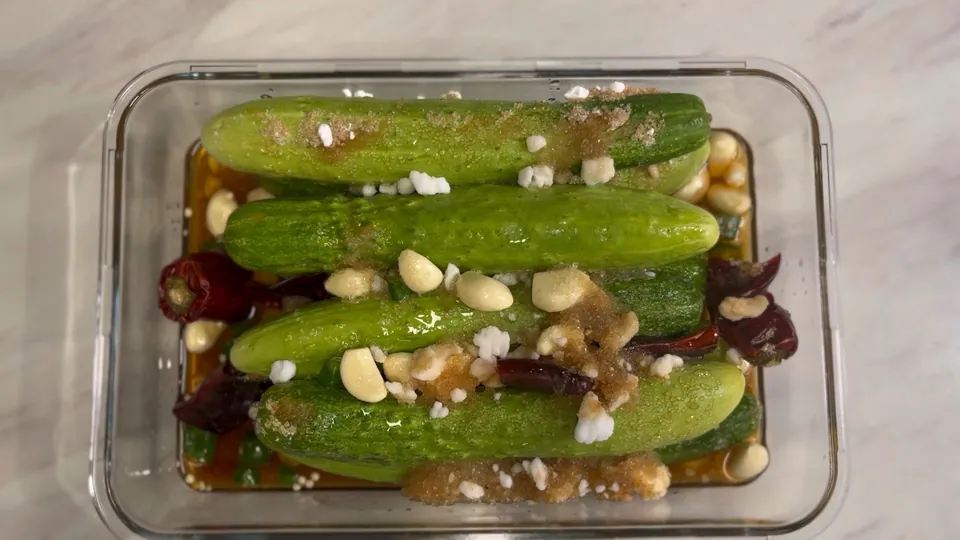
I layered the cucumbers in a large, airtight container, sprinkling the sugar and salt evenly. Because my salt was slightly clumpy, I used a fork to break up the chunks to ensure an even distribution.
Next, I poured in the vinegar and soju. Once all the ingredients were inside, the container needed a good shake to dissolve the dry seasonings. My strong husband helped shake the heavy container—which was a huge help! 😄 I sealed the lid tightly, wrote the date on the container with a kitchen marker, and let it sit at room temperature (in a cool, shaded spot) for 7 days.
🧪 Why the No-Boil Brine Method Works
You might wonder how this recipe preserves cucumbers without boiling water. The answer lies in chemistry:
- Extreme Osmotic Pressure: By adding high concentrations of dry salt and sugar directly to the cucumbers without water, we create an environment with extremely low water activity. Water inside the cucumber cells is drawn out rapidly, shrinking the cells and creating the brine naturally.
- Acidity (Acetic Acid): Vinegar introduces acetic acid, lowering the pH of the liquid to between 3.0 and 4.0. Pathogenic bacteria, including Clostridium botulinum, cannot survive or multiply in an environment with a pH below 4.6. This acidic barrier is highly effective for food preservation.
- Ethanol (Soju): Soju contains about 16-20% ethanol. Ethanol is a mild sanitizer that penetrates microbial cells and denatures their proteins. In home pickling, it prevents the formation of “Kolgaji” (Kahm yeast)—the unsightly white film of wild yeast that often forms on top of traditional brines. It keeps the pickling liquid crystal clear and odor-free.
🔄 Fermentation – Flipping Once a Day
During the 7-day room temperature fermentation, you must flip the container upside down once a day.
In the beginning, the liquid will only cover the bottom of the container. By day two or three, however, osmosis will have pulled out so much water from the cucumbers that they will be completely submerged in their own juices. Flipping the jar daily ensures that all the cucumbers get equal exposure to the salt, acid, and alcohol, guaranteeing uniform curing.
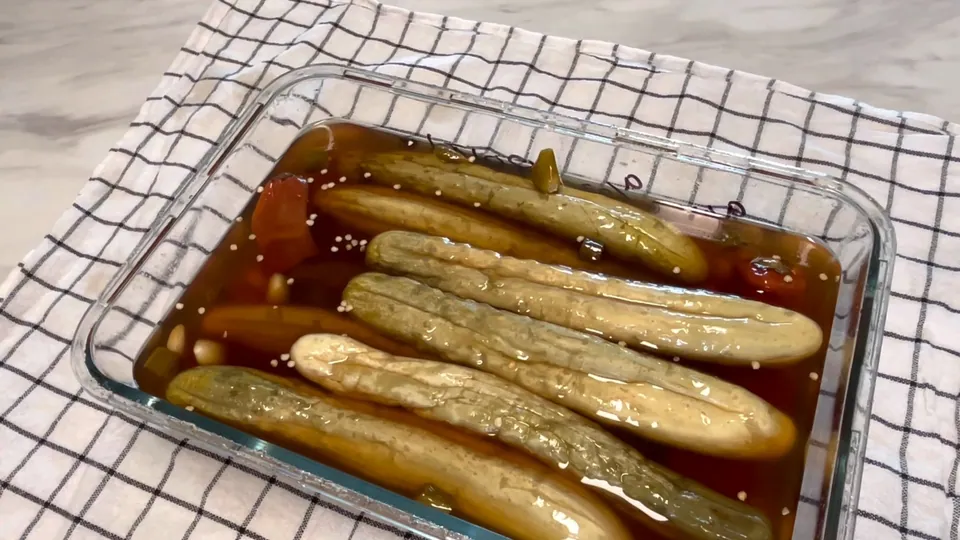
🧪 Chlorophyll to Pheophytin: The Color Change
Over the course of the week, you will notice the cucumbers lose their bright green color and turn an olive-brown shade.
This color shift is a chemical reaction. The acid in the vinegar displaces the magnesium ion at the center of the chlorophyll molecule (the green pigment) and replaces it with hydrogen ions. This reaction converts chlorophyll into pheophytin, which has an olive-brown hue. This color change is a clear indicator that the pickling liquid has fully penetrated the core of the cucumber.
🍽️ Serving Ideas – Perfect with Rich or Greasy Dishes
After 7 days of fermentation, the Oi-ji is ready. The flavor is tangy, sweet, and salty, with a clean kick from the garlic and chilies. Because of its acidity and crunch, it pairs beautifully with greasy foods like grilled pork belly, pizza, fried chicken, or pasta, cutting through the oiliness and cleansing your palate.
🥗 How to Prepare and Use Oi-ji in Home Cooking
Here are three simple ways to enjoy your homemade Oi-ji:
- Oi-ji Muchim (Seasoned Cucumber Salad): Slice the pickled cucumbers into thin rounds. Place them in a cheesecloth or clean kitchen towel and squeeze out as much water as possible. Squeezing them dry compresses the cell structures, making the texture extremely crunchy. Toss the squeezed cucumbers with a pinch of minced garlic, chopped scallions, 1 tablespoon of sesame oil, a pinch of sugar, and Korean chili flakes (gochugaru). It is an incredible side dish for rice!
- Oi-ji Naengguk (Cold Cucumber Soup): Slice the Oi-ji thinly and drop them into a bowl of ice-cold water. The pickling juices on the cucumbers will season the water, creating a refreshing, tart, and cooling soup perfect for hot summer days.
- Kimbap and Bibimbap Topping: Chop the squeezed Oi-ji into small pieces and use it as a filling for kimbap instead of yellow pickled radish (danmuji), or use it as a crunchy garnish for rice bowls.
🥡 Safe Storage and Hygiene Guidelines
- Refrigeration: After the 7-day fermentation is complete, store the container in the refrigerator (0°C to 4°C / 32°F to 40°F). It will stay fresh and crunchy for up to 6 months.
- Keep Submerged: To prevent surface mold, keep the cucumbers fully submerged in the brine. Use a fermentation weight, a small ceramic plate, or a food-safe plastic bag filled with clean water to weigh them down.
- Hygiene: Always use clean, dry chopsticks or tongs to retrieve the cucumbers from the container. Introducing moisture, grease, or saliva will contaminate the brine and cause mold to develop.
💛 Wrapping Up
Making Oi-ji for the first time was a wonderful experience. Seeing the cucumbers transform from plump, watery vegetables into dense, crunchy, flavorful pickles using only the power of chemistry and time was incredibly rewarding.
🧪 The Science & Pro Tips for Super Crunchy Pickles
Achieving that clean “crunch” when biting into a cucumber pickle relies on cell wall mechanics and osmotic dynamics.
- Why You Must Pour the Boiling Brine Hot: Never let the sweet-and-sour pickling liquid cool down before pouring it over the cucumbers.
- The Science: The boiling liquid collapses the air pockets in the cucumber tissue and shock-heats the outer plant cell walls. This locks the pectin (the structural carbohydrate that glues plant cells together) in place, sealing the crispness. If you use cooled brine, water exits the cells slowly via osmosis, resulting in a flabby, rubbery pickle.
- Glass Sterilization to Prevent Mold: Always place your glass storage jars in cold water and bring them to a boil to sterilize. Let them air-dry completely. Any residual water or bacteria will contaminate the brine, turning it cloudy and causing mold to grow on the surface.
- Acid-Sugar Preservation Barrier: Acetic acid in vinegar drops the pH of the pickle jar below 4.6, creating an environment where harmful pathogens (including Clostridium botulinum) cannot grow. Keep the standard water-vinegar-sugar ratio around 2:1:1 for food safety and delicious taste.
👩🍳 SSUCOOK’s Recipe Trustworthiness & Food Safety Guide
- Family-Tested Recipe: This recipe has been hand-crafted, cooked, and family-approved by SSUCOOK. I test and refine every step in my own kitchen to ensure a reliable culinary experience.
- Safe Food Storage: Do not leave cooked food at room temperature for more than 2 hours. Transfer it to an airtight container and refrigerate below 4°C (39°F). Consume within 3 days. For longer storage, freeze portions for up to 1 month. When preparing meals for infants or vulnerable individuals, maintain strict kitchen hygiene by separating knives and cutting boards for raw meat and vegetables.
If you have fresh cucumbers, try this simple, no-boil pickling recipe. It is a fantastic way to preserve the seasons and bring a traditional Korean touch to your table. Have a wonderful, crisp day! 🥒