Salt-Free Dried Pollack Soup (Hwangtae-guk) for 20-Month-Old Babies – A Refreshing and Hearty Breakfast
A mild and refreshing salt-free dried pollack soup (Hwangtae-guk) recipe designed for 20-month-old toddlers. By utilizing the water used to soak the dried pollack as a natural broth, this nutritious breakfast soup achieves deep flavor without any added salt.
Hello everyone~
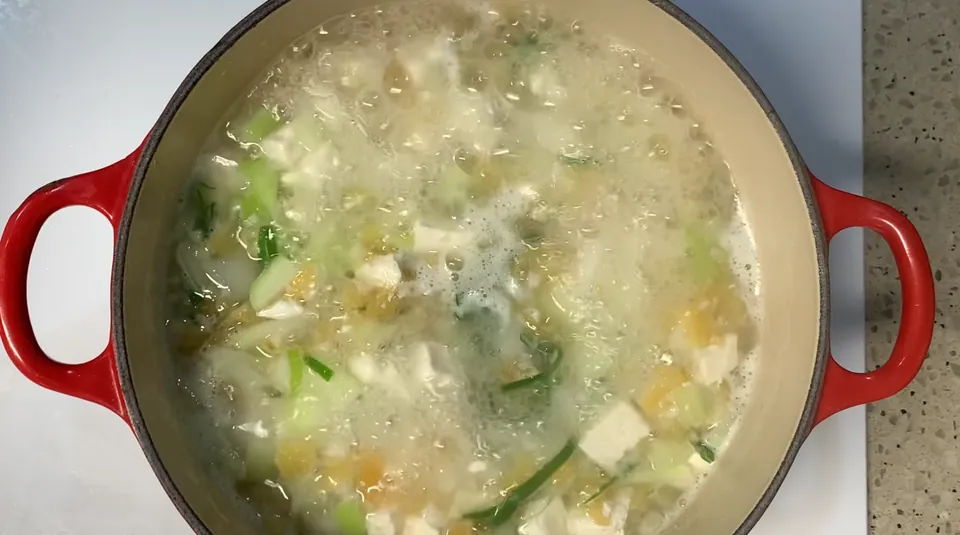
Today, I am sharing a gentle, refreshing, and salt-free breakfast menu that I made for my 20-month-old toddler during our busy stay-at-home parenting days: Salt-Free Dried Pollack Soup (Hwangtae-guk).
Caring for a toddler at home means preparing three meals and two snacks every single day, and morning is undoubtedly the most hectic time. To gently wake up a baby’s delicate stomach without irritation while providing plenty of energy, I usually serve a warm soup mixed with rice (guk-bap style). Among the options, Hwangtae-guk is an absolute lifesaver. Thanks to the naturally deep, savory flavor of dried pollack, toddlers love it even during the salt-free (low-sodium) baby food stage where no salt or soy sauce is used 😊
This recipe features a clean, fishy-odor-free broth infused with sweet Korean radish, soft tofu, and onions for a balanced meal. I will walk you through the simple steps, the science behind extracting maximum natural umami, and crucial safety tips for preparing dried fish for babies.
📋 Recipe Overview
- Prep & Cook Time: Approx. 25–30 mins (including soaking time)
- Difficulty: Easy
- Servings: Approx. 3–4 toddler portions (perfect for freezing)
- Cooking Method: Boiling / Simmering (using a cast iron pot)
🛒 Ingredients – Pure and Healthy Ingredients for Your Baby
Since my 20-month-old is still on a salt-free diet, I do not use any artificial seasonings, salt, or soup soy sauce. Instead, we will extract the natural sodium and free amino acids inherent in the ingredients to build a clean yet deep flavor profile.
- 20g dried pollack strips (soaked in water)
- 40g Korean radish
- 50g tofu
- 1/4 onion (approx. 30g)
- 1/2 tsp minced garlic
- 10g green onion (scallion), finely chopped
- 500ml pollack-soaking water (used as the broth base)
Many parents worry, “Will my baby eat this if it has absolutely no salt?” However, dried pollack (Hwangtae) is prepared by freezing and thawing pollack repeatedly in the winter cold. During this dehydration process, the proteins break down and concentrate into flavorful free amino acids. It is packed with glutamic acid and aspartic acid (responsible for savory umami) as well as glycine and alanine (which provide a subtle sweetness). Combined with the refreshing taste of radish and the sweet notes of onion, it creates a naturally delicious broth that toddlers adore.
Moreover, because 20-month-olds are still developing their chewing (mastication) and digestive systems, combining animal protein (pollack) with plant protein (tofu) maximizes nutrient absorption and provides a soft, pleasing texture.
🔪 Preparation – Baby-Friendly Sizing and the Science of Bone Removal
The success of a baby-friendly fish soup depends entirely on rigorous bone removal and slicing ingredients to match a toddler’s mouth size. Although dried pollack is processed to remove bones, tiny pin bones can remain hidden in the flesh, posing a serious choking hazard.
First, submerge 20g of dried pollack strips in clean, cold water and let them soak for 10 to 15 minutes.
[!IMPORTANT] Never discard the soaking water! The water-soluble amino acids and proteins that give the pollack its rich umami dissolve into this water. Using it as the soup broth base is the key to creating a rich flavor without salt.
Gently squeeze the soaked pollack to remove excess moisture (reserve the soaking water). Lay the strips on a cutting board and run your fingers along the grain of the fish. If you feel any hard, needle-like pin bones, pull them out completely using clean kitchen tweezers or kitchen shears. Once all bones are removed, finely chop the pollack into tiny pieces (about 0.5 cm or smaller) so the toddler can chew and swallow it effortlessly.
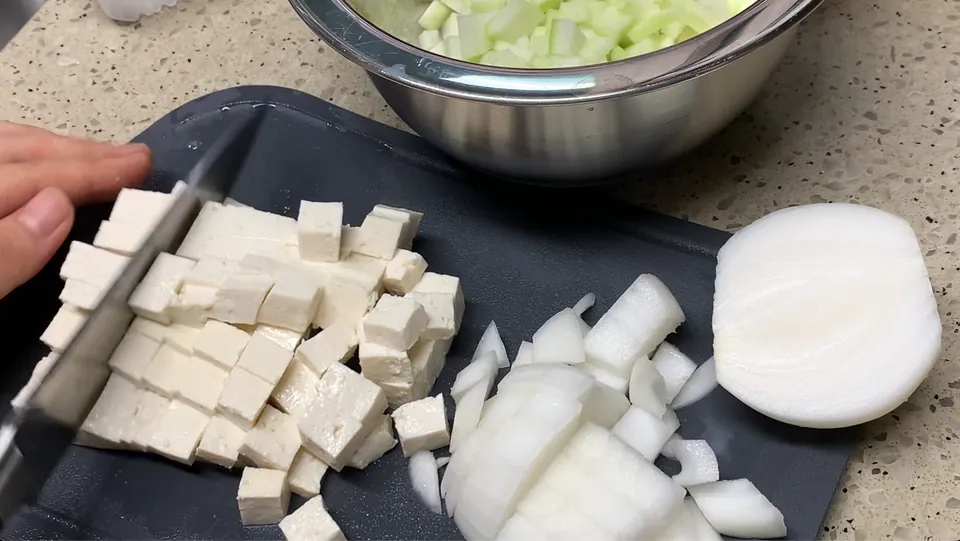
Next, cut the radish, tofu, and onion into tiny, adorable sizes. Slice the radish thinly and dice it into small squares. Cut the tofu into small cubes that will remain intact during cooking but melt in the baby’s mouth. Finely dice the onion so it softens and disappears into the broth.
🥘 Let’s Cook – The Thermodynamics of Cast Iron and a Salt-Free Broth
When cooking baby food, I find that using a heavy cast iron pot (cocotte) yields a much deeper, richer broth compared to thin stainless-steel pans. This is why I always reach for my cast iron pot for my baby’s soups and rice.
This choice is backed by thermodynamics. A cast iron pot has a very high heat capacity (thermal mass). While it takes longer to heat up, it retains heat exceptionally well and radiates it evenly throughout the cooking chamber. This stable, gentle heat breaks down the vegetable and fish cell walls slowly, allowing the water-soluble proteins and amino acids to dissolve steadily into the broth without evaporating the delicate aromatic compounds.
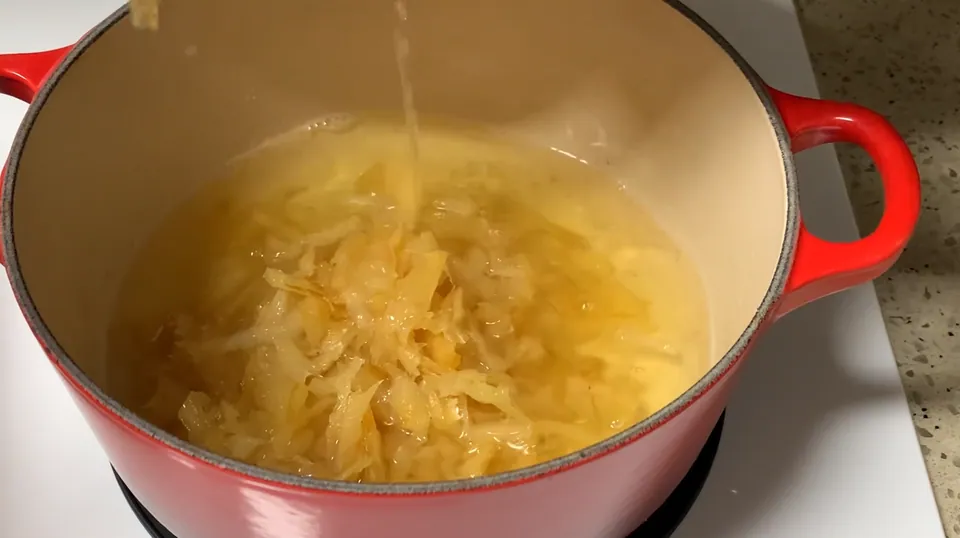
Add the chopped pollack and the 500ml of pollack-soaking water to the cast iron pot. Bring it to a boil over high heat.
As the water begins to boil, reduce the heat to medium-low. You will see a layer of white foam (scum) rising to the surface. This foam consists of coagulated water-soluble proteins. While it is completely safe to consume, skimming it off with a spoon ensures a crystal-clear appearance and a clean, refreshing taste, eliminating any trace of fishy bitterness.
🥕 Adding Vegetables – Natural Sweetness and Nutrient Synergy
Once the broth turns slightly milky and the pollack begins to cook, add the prepared radish, tofu, and onion all at once.
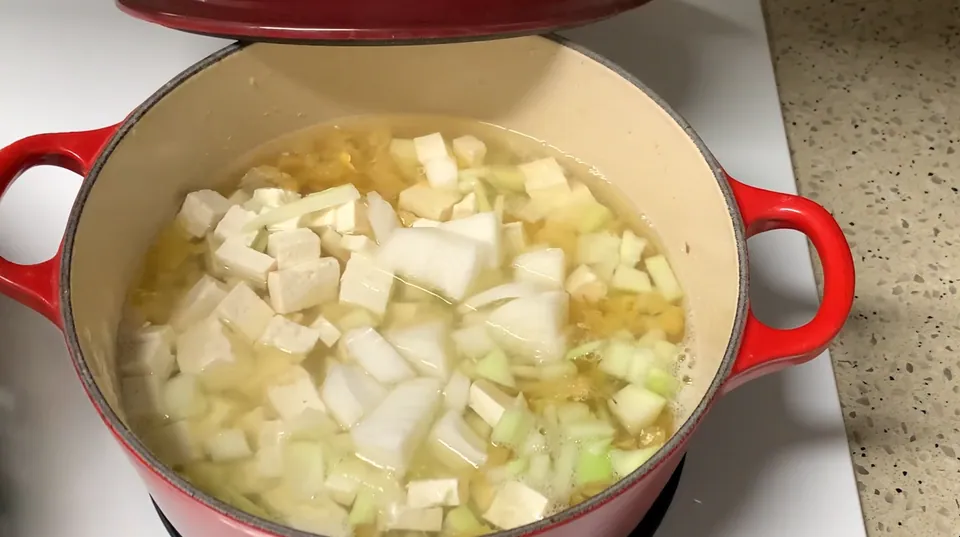
At this stage, the radish and onion undergo a fascinating thermochemical reaction that enhances the soup:
- Radish Transformation: The sharp, pungent sulfur compounds in raw radish, called isothiocyanates, break down and evaporate under heat. This leaves behind a clean, refreshing sweetness from the radish’s natural sugars. Additionally, radish is loaded with digestive enzymes such as amylase and diastase, which help the toddler digest proteins and starches, keeping their tummy happy.
- Onion Transformation: The sulfur compound propyl disulfide in onions is hydrolyzed during boiling, converting into propyl mercaptan, which is 50 to 70 times sweeter than sucrose. This gives the broth a mild, sophisticated sweetness without a single grain of added sugar.
These sweet and refreshing elements balance the savory depth of the pollack, while the soft tofu absorbs the flavorful broth, becoming exceptionally tender and pleasant to eat.
🌿 Finishing Touches – Mild Aromatics and Simmering
After the vegetables have simmered for about 10 minutes and the radish looks translucent, add 1/2 tsp of minced garlic and the chopped green scallions.
The compound responsible for the pungent aroma and taste of garlic and green onions is allicin. While allicin has powerful antimicrobial and antioxidant properties, raw or undercooked garlic can be too harsh and irritating for a 20-month-old’s sensitive stomach.
Fortunately, allicin is highly heat-labile. By adding the garlic and scallions about 5 minutes before turning off the heat, we allow the harsh allicin to break down into milder compounds. This removes the spicy bite and leaves a sweet, savory aroma that neutralizes any remaining fishy notes, tying the whole soup together beautifully.
Let the soup simmer on low heat for another 20 minutes. This slow simmer extracts the remaining nutrients and gelatinizes any collagen, producing a rich, comforting, salt-free Hwangtae-guk!
🍽️ Feeding Time – A Warm and Nutritious Morning
Ladle the warm, milky-white soup over a bowl of soft rice and mix it gently. Because it contains no salt or harsh seasonings, it is easy on a toddler’s morning stomach, and the high-quality proteins from the pollack and tofu provide sustained energy for a day full of play and growth.
Of course, stay-at-home parenting comes with its challenges. Some days, your toddler might enter a “food strike” (picky eating phase), refusing to take a single bite or spitting it out, which can be incredibly disheartening. Every parent knows that sinking feeling when their hard work in the kitchen is rejected. During those times, I remind myself: "This is just a normal phase of development, and it will eventually pass." I take a deep breath and keep going, knowing that today’s effort builds a healthy future.
🧪 Culinary Science & Nutritional Analysis: Salt-Free Baby Pollack Soup
Here is a scientific breakdown of how we achieved a deep, savory soup without adding any salt:
- Amino Acid Enrichment through Freeze-Thaw Dehydration: The traditional freezing and thawing process of making dried pollack (Hwangtae) concentrates its nutritional value. As water evaporates, protein structures break down into free amino acids like glutamic acid (umami) and glycine/alanine (sweetness). This concentrated amino acid profile stimulates the tongue’s umami receptors (T1R1/T1R3) directly, creating a full-bodied taste without sodium chloride (salt).
- Water-Soluble Compound Preservation: The flavor compounds in dried fish are primarily water-soluble. Soaking the fish extracts these compounds into the liquid. Reusing the soaking water preserves these valuable amino acids and nitrogenous extractives, ensuring none of the natural flavor is wasted.
- Thermal Mitigation of Pungent Organosulfur Compounds: The harsh organosulfur compounds (allicin) in garlic and scallions are converted through boiling into diallyl disulfide and other sweet-tasting molecules. This process eliminates gastrointestinal irritants while contributing to a complex, baby-friendly aroma.
👩🍳 SSUCOOK’s Recipe Trustworthiness & Food Safety Guide
- Family-Tested Recipe: This recipe has been lovingly prepared, tested, and toddler-approved in my own kitchen. I design all my toddler meals to be both highly nutritious and appealing to developing palates.
- Toddler Food Safety & Storage Rules: Infants and toddlers have developing immune systems, making them more vulnerable to foodborne illnesses. Never leave cooked soup at room temperature for more than 2 hours. Cool it rapidly and store it in airtight, BPA-free baby food containers. Refrigerate for up to 2 days, or freeze for up to 2 weeks. Before serving, reheat the soup thoroughly until it reaches a core temperature of 75°C (167°F) for at least 1 minute, then let it cool to a lukewarm temperature. Additionally, always double-check the fish pieces for any missed pin bones with your clean fingers right on the baby’s plate before feeding.
To all the parents starting their day with the question, “What should I feed my child today?”—I hope this warm, nutritious, and salt-free Hwangtae-guk recipe brings comfort to your kitchen. Even in the midst of exhausting parenting routines, seeing our little ones smile and finish a warm bowl of soup gives us the strength to keep going. Hang in there, you are doing an amazing job!
Wishing you and your baby a warm, healthy, and happy mealtime 🥣✨