Making Gochu Dajimi – My Husband's All-Time Favorite Side Dish
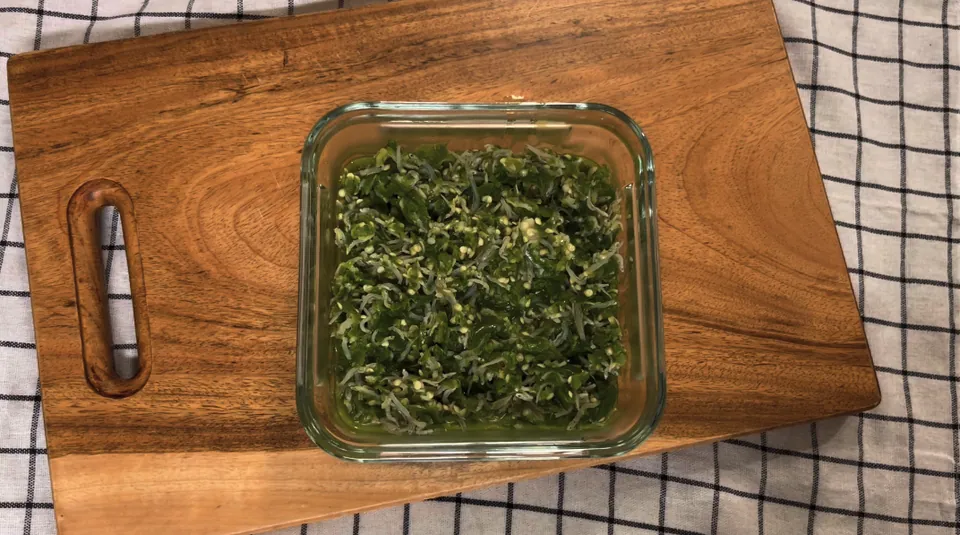
Gochu Dajimi is a spicy Korean side dish made by stir-frying minced Cheongyang chili peppers and anchovies in garlic oil. Originating from the Gyeongsang Province, this addictive dish pairs well with almost any meal and has become a staple on our family table since I first tasted it after getting married.
Hello there~
Today, I’m sharing a recipe for Gochu Dajimi (also known as Gochu Jangmul), which is my husband’s absolute favorite Korean side dish.
I first tasted this unique relish at my in-laws’ house after getting married, and I was immediately hooked. It is a traditional side dish originating from the Gyeongsang Province in Korea. It is spicy, salty, and packed with an intense savory flavor. Whenever you find yourself losing your appetite, all you need to do is mix a single spoonful of this magic relish into a bowl of warm rice, and before you know it, you will have finished the entire bowl!
Beyond being a simple rice companion, Gochu Dajimi works wonderfully as a spicy condiment (Dadaegi) for stews, soups, and noodle dishes. In this comprehensive guide, I will share not only the step-by-step recipe but also the fascinating chemistry behind the ingredients, critical safety tips for handling hot chilies, proper storage methods, and creative pairing ideas to enrich your home dining experience!
- 20 Cheongyang chili peppers
- 1 tbsp minced garlic
- 2 tbsp cooking oil
- 1 tbsp light soy sauce or tuna extract
📋 Recipe Overview
- Prep & Cook Time: Approx. 20 mins
- Difficulty: Easy
- Servings: 1 Jar (Approx. 250ml)
- Cooking Method: Sautéing / Reducing
🌶️ Prepping the Chili Peppers – The Spicy Core
The star ingredient of Gochu Dajimi is the Cheongyang chili pepper, a native Korean chili known for its clean, sharp, and intense heat. For this batch, I prepared 20 large, fresh Cheongyang peppers.
While chopping them finely by hand with a knife yields the absolute best texture, chopping this many spicy peppers can be a tearful experience. To make the process faster and more convenient, I used an electric vegetable mincer (chopper) this time.
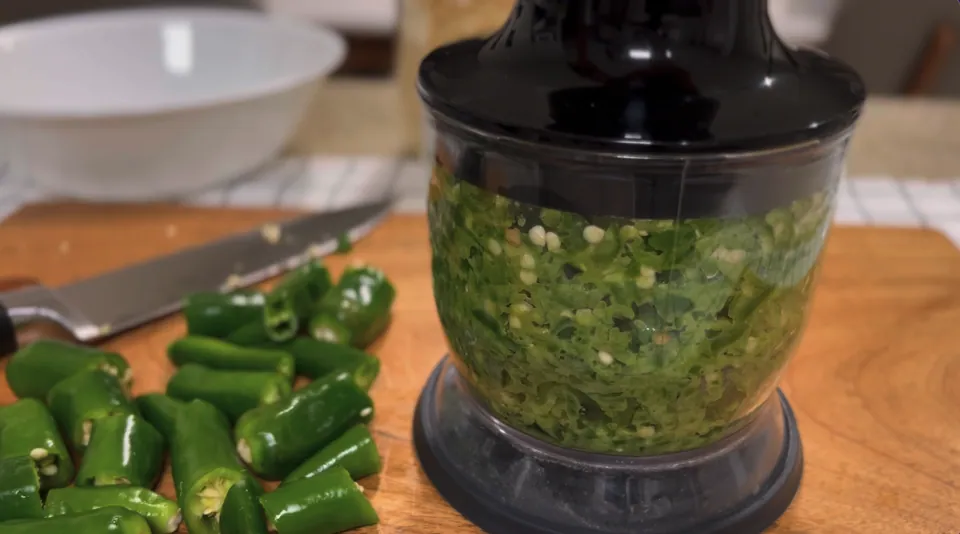
It is important to include the pepper seeds in the mince. The seeds and the white inner membranes (the placenta) contain the highest concentration of capsaicin, which is where the true, addictive heat of the pepper resides. Once minced, the vibrant green color and sharp, stinging aroma will immediately fill your kitchen and awaken your taste buds.
⚠️ Kitchen Safety: Preventing and Treating “Pepper Burn”
When working with 20 spicy chilies, you must wear food-safe nitrile or latex gloves. The fiery chemical in chilies, capsaicin, binds tightly to TRPV1 pain receptors in your skin, mimicking the sensation of physical heat. This causes a painful, throbbing burning sensation commonly known as “pepper burn.” If you chop these peppers bare-handed and then accidentally rub your eyes, touch your nose, or handle your baby, you can cause severe pain and irritation.
- How to Treat Pepper Burn: If you get capsaicin on your skin and it starts to burn, do not wash it with plain water. Capsaicin is highly hydrophobic (fat-soluble) and practically insoluble in water. Washing with water will only spread the oil across a larger surface area, making the burn worse. Instead, wash your hands with milk, high-proof alcohol, or rub them with vegetable oil first. The fats and alcohol will dissolve the capsaicin molecules, allowing you to wash them away easily with dish soap.
- Ventilation: When stir-frying the minced chilies, the capsaicin oil volatilizes into the air, creating a spicy smoke that can cause intense coughing and eye irritation. Make sure to turn your stove’s exhaust hood to its highest setting and open nearby windows for proper cross-ventilation.
🧪 Culinary Chemistry of Capsaicin
From a preservation standpoint, capsaicin acts as a natural antimicrobial agent, hindering the growth of mold and bacteria. When ingested, it stimulates the release of endorphins (our body’s natural painkillers) and increases thermogenesis (metabolic rate), which is why eating spicy foods often makes us feel refreshed and energized.
🐟 Anchovy Prep – The Umami Booster
To balance the fire of the chilies, we add dried anchovies (멸치). I used a volume of anchovies equal to about half the volume of the minced peppers. I used medium-sized soup anchovies, removing the heads and bitter black guts (internal organs) before coarsely chopping them so they integrate seamlessly with the peppers.
🧪 Dry Roasting: Evaporating Fishy Aromas & The Maillard Reaction
Dried seafood contains a organic compound called trimethylamine oxide (TMAO). Over time, as the fish dries, some of this compound breaks down into trimethylamine (TMA), which is the source of the unpleasant, fishy smell.
To eliminate this fishy note and bring out a nutty, roasted profile, you must dry roast the chopped anchovies in a hot, dry pan over low heat before adding any oil or liquids.
Under dry heat, the volatile TMA compounds evaporate into the air along with any residual moisture. Simultaneously, the proteins and trace sugars on the anchovy surface undergo the Maillard reaction, producing roasted flavor compounds called pyrazines. Once dry roasted, shake the anchovies in a fine mesh strainer to remove any bitter dust and powder, ensuring a clean finish.
🧄 Garlic Oil – My Mother-in-Law’s Secret Tip
Now, let’s talk about the secret step that elevates this relish: stir-frying the ingredients in garlic-infused oil. This is a culinary treasure I learned from my mother-in-law, and it binds the flavors together beautifully.
🧪 The Science of “Cold Start” Garlic Oil
When garlic is crushed or minced, its cell walls break, allowing the enzyme alliinase to react with the compound alliin to form allicin. Allicin is responsible for garlic’s pungent aroma and health-promoting properties, but it is highly heat-sensitive and burns easily.
To extract the best garlic flavor, add your cooking oil and minced garlic to a cold pan and turn the heat to medium-low (Cold Start Method). Heating them together gradually allows the oil-soluble sulfur compounds (like diallyl disulfide) to gently dissolve into the cooking fat. If you throw garlic into hot oil, the water inside the garlic vaporizes instantly, causing the garlic sugars to caramelize too fast and turn bitter.
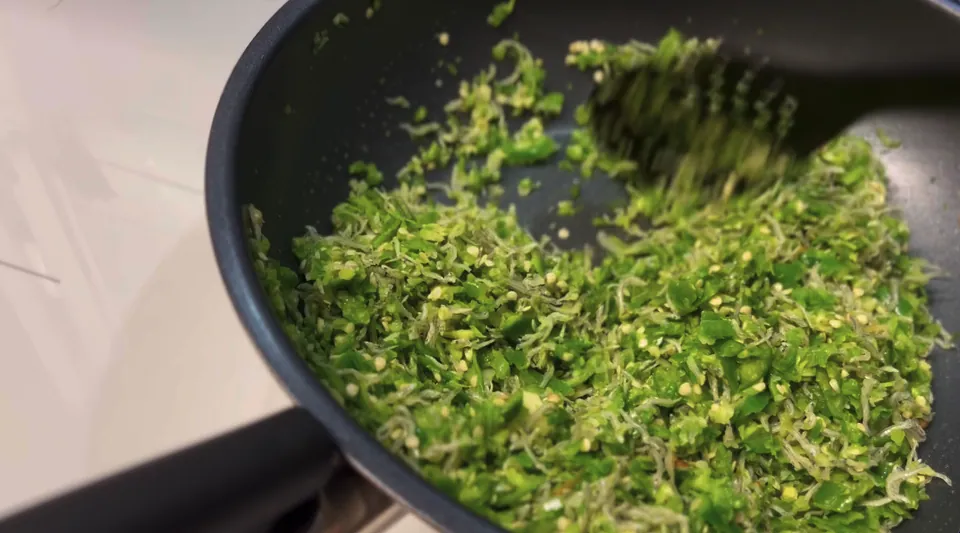
Once the garlic oil becomes fragrant and turns a very pale golden color, add the minced peppers and roasted anchovies, then crank the heat up to sauté everything quickly and lock in the vibrant green color.
💧 Simmering – Water and Sauce to Finish
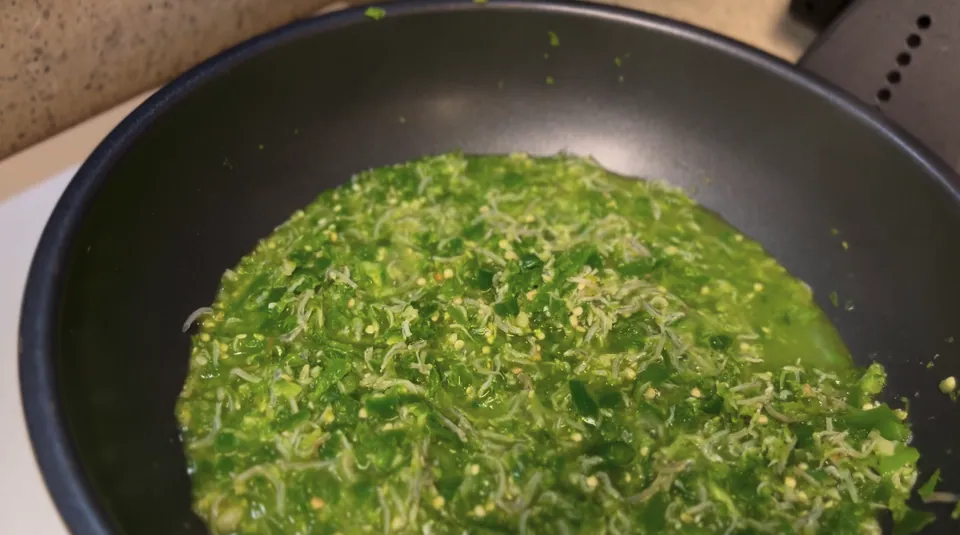
Once the chilies and anchovies are coated in the fragrant garlic oil, pour in just enough water to barely cover the ingredients and bring it to a simmer. Add 1 tablespoon of light soy sauce (or tuna extract) to season.
🧪 The Concept of Umami Synergy
The science behind adding soy sauce or tuna extract to anchovies lies in umami synergy. Anchovies are rich in inosinate (a nucleotide), while soy sauce and tuna extract are packed with glutamate (an amino acid). When inosinate and glutamate are combined in a dish, they bind to the umami receptors on our tongue simultaneously, changing the shape of the receptor to hold onto the savory signal longer. This creates a savory taste profile that is eight times stronger than if you used either ingredient alone!
Let the mixture simmer gently on medium-low heat for 10 minutes. This slow simmer allows the capsaicin and savory compounds to emulsify into the liquid, reducing it to a thick, jam-like consistency.
🍽️ Serving – Gone in Just Two Days
Once the Gochu Dajimi has cooled completely, transfer it to a glass container. It can be served at room temperature or chilled.
My husband loves this side dish so much that even when I make a massive batch, he finishes it in just two days! It is incredibly addictive. The sharp kick of the chilies combined with the deep, savory umami of the roasted anchovies keeps you coming back for more.
🍱 Creative Pairing Ideas
- Grilled Pork Belly (Samgyeopsal): Use Gochu Dajimi as a replacement for traditional ssamjang. The sharp heat cuts through the fatty richness of the pork belly, creating a perfectly balanced bite.
- Pan-Seared Tofu: Spoon a small amount of Gochu Dajimi over warm, crispy pan-fried tofu. The contrast between the mild, soft tofu and the spicy, savory topping is spectacular.
- Korean Soy Egg Rice (Ganjang Gyeraen Bap): Drizzle a spoonful of sesame oil over hot rice, add a fried egg, and mix in a tablespoon of Gochu Dajimi. It is the ultimate quick comfort meal.
🥡 Storage and Hygiene Guidelines
Because of its low water activity and natural preservatives (salt and capsaicin), Gochu Dajimi stores relatively well.
- Jar Sterilization: Always store the relish in a glass jar that has been sterilized in boiling water and completely dried.
- Refrigeration: Keep the jar in the coldest part of your refrigerator. It will stay fresh and delicious for 2 to 3 weeks.
- Avoiding Contamination: Never double-dip. Always use a clean, completely dry spoon to scoop out the portion you need. Introducing moisture or saliva into the jar will cause mold to grow quickly.
💛 Wrapping Up
Gochu Dajimi is a beautiful representation of Korean home cooking—taking simple, humble ingredients like green chilies and dried anchovies and turning them into an extraordinary, flavor-packed staple. Although mincing the peppers makes me sneeze, seeing my family enjoy their meals makes it all worthwhile.
If you have green chilies and anchovies in your kitchen, try making this magical side dish this weekend. Take care, eat well, and have a wonderful, spicy day! 🌶️🍚